ping #1 · tiny delights
"Bold move.": The tiny jabs you get for skipping an exercise
Skip an exercise in LingFit and you don't get a scolding, you get a wink. A ping about four very short sentences.
There’s a moment in every learning app that almost nobody talks about: the moment you just skip an exercise. Not in the mood, no headphones handy, the word feels silly right now. Most apps treat that moment like an administrative procedure. On to the next task, maybe a gray note, done.
LingFit turns it into a punchline. Skip an exercise and you get a short reaction line, and it doesn’t sound like the teacher’s lounge — it sounds like a friend raising an eyebrow. We went through the documented lines and got stuck on four sentences:
- “We saw that.”
- “Bold move.”
- “The word is disappointed.”
- “The lesson remembers.”
Four sentences, none longer than four words. And still, each one carries a little attitude.
The disappointed word
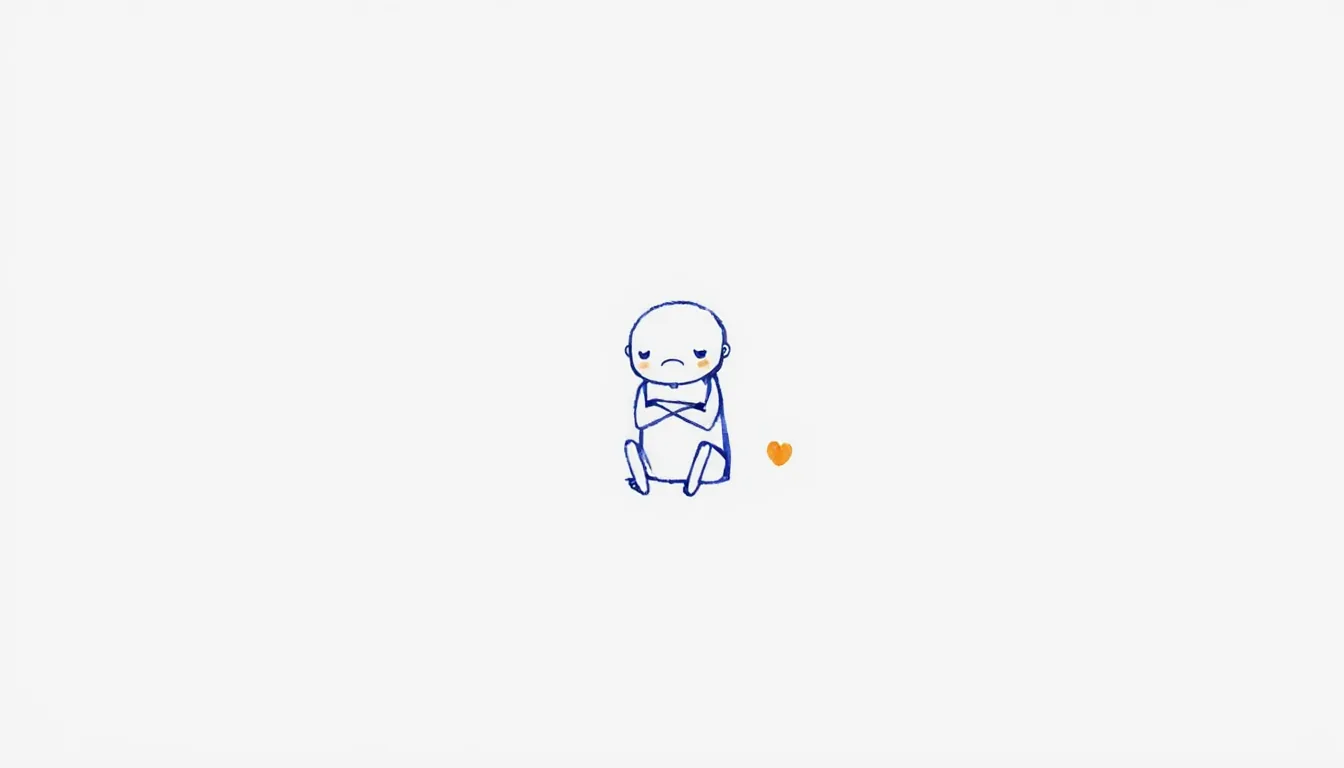
Our favorite is “The word is disappointed.” The line does something clever: it moves the disappointment away from the app and away from you, and onto a word. You can’t take a word seriously when it’s sulking. You immediately picture it sitting in the corner with crossed arms, pouting.
That’s exactly how we drew it in our sketchbook: a little word-creature with stick legs, bottom lip pushed out, looking off to the side. That’s the trick. A potential pang of guilt becomes a character you smile at. And when you smile, you’re more likely to keep clicking than to close the app.
“The lesson remembers.” works the same way, just with a hint of horror movie. The lesson remembers that. It’s half threat, half joke, and it fits a feature LingFit actually has: missed words come back in a review round at the end of a lesson. So the line isn’t just cheeky — it’s also a little bit true.
Why a wink works better than a scolding
By its own account, LingFit has written over 200 reaction lines for the moments after an exercise, for hits as well as for skips. Get something right and you might see “Boom.”, “Nailed it.” or “Brain = big.”. The skip lines are the counterpart, and they follow a logic the makers describe themselves: a cheeky line after a skip is meant to take the frustration out of it, so you keep going instead of giving up.
That lines up with something anyone who’s ever learned something new already knows. A mistake met with a grin weighs less than one underlined in red. The app skips the red and takes on the tone of a roommate saying, “I saw that. Whatever.”
And if you’re over 35?
This is where it gets interesting. LingFit asks for your age group during onboarding and adjusts the tone. Under 35, you get the cheeky versions. At 35 or older, after a skipped exercise you’re more likely to read “No worries, next one.” or “Saved for later.”.
We think that’s a surprisingly fine-grained decision. The same moment, two tones. The younger version teases, the older one reassures. Neither one scolds. You could argue about whether a 40-year-old wouldn’t also enjoy seeing a disappointed word, but the basic idea that humor is personal makes sense to us.
Three tiny delights we noted
- Brevity as a style choice. No line needs more than four words. You read it in passing, and it doesn’t slow you down.
- The personifying. A word that’s disappointed and a lesson that remembers: suddenly the lesson has character, without a single extra character being needed for it.
- The honesty. “We saw that.” doesn’t pretend nothing happened. It names the skip, but without punishment. That feels more grown-up than a silent page turn.
What we’d steal for our own projects
If you design apps, games, or even just forms, there’s plenty to take from these four sentences. Error states aren’t dead zones — they’re stages for personality. A cancel button, an empty search, an expired session: there’s always someone sitting there who’s just a tiny bit disappointed. A well-written line can catch that disappointment.
So our note in the margin of the sketchbook reads: write the line for the moment something goes wrong first. The line for success almost writes itself.
If you want to read the lines yourself, you’ll find LingFit at lingfit.app. We recommend deliberately skipping an exercise, just this once. The word will survive it.