ping #46 · tiny delights
The Washington Paw: Fox Politics, Bush Scandals, and Tail-Tax Reform
A fictional fox newspaper covering bush scandals and the tail tax. Why satire makes easy reading texts easier for language learners.
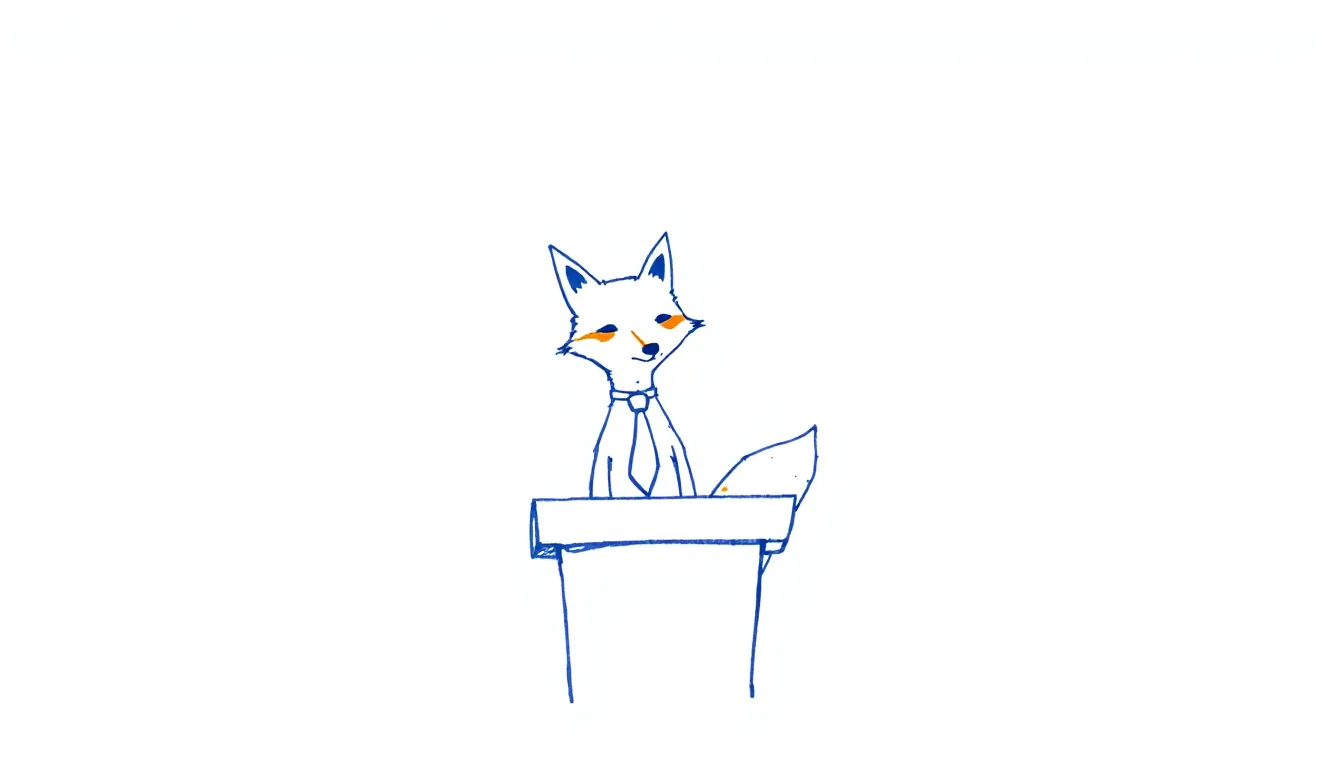
Among the senders of the reading texts in LingFit, there’s one that makes us chuckle every time we see the name: The Washington Paw. A newspaper whose beat, according to its makers, is the chaotic world of fox politics, from bush scandals to tail-tax reform.
Honestly, that’s all we need to know to fall in love with it. But we want to understand why this little joke fits a language app so well.
What the newspaper is
First, the facts. LingFit has a section with short stories and news-style articles in easy language. The texts are tailored to your own level, every word can be tapped (translation, base form, pronunciation), and the sentences have audio, so you can read along and listen. You can like your favorite texts.
These texts are published by four fictional senders: Foxford University, The Washington Paw, The Daily Tail, and The Fluffy Times. Each has its own style. The Washington Paw is the one with the politics.
We’re not making up which stories actually appear in The Washington Paw here. What interests us is the concept — the idea of publishing reading texts under a satirical newspaper masthead.
Why satire makes things easier
Easy-language texts have a problem: they quickly feel like worksheets. Short sentences, familiar words, nothing happens. “Anna goes to the supermarket. She buys bread.” It’s understandable, but it’s also just a little bit sad.
A satirical frame solves this in an elegant way. Political news has a familiar shape: there are scandals, reforms, debates, arguments. You know this shape from your own language, and that helps with comprehension. You roughly know what happens in a report about a scandal, even if you don’t know every word. And when the scandal takes place in a bush and the reform taxes the tail, the familiar structure stays, but the content turns absurd — and therefore harmless.
The result: you read a text that feels like a real newspaper, but without the weight of real politics. Nobody has to get upset about the tail tax. You can just laugh and pick up words along the way.
The wordplay in the name
The name itself is a small feat. It plays on the name of a well-known US capital newspaper and swaps a word for “Paw.” That’s silly enough to make you smile right away, and clear enough that everyone gets it: this is about politics, but in fox format. A sender that explains its genre and tone in two words is pretty good naming.
Reading with a net and a double bottom
What makes The Washington Paw extra pleasant for learners is the tech under the joke. Every word in the text can be tapped. The tooltip shows several translations, the base form (with an article for nouns, where the language has one), a pronunciation at normal and slow speed, and an AI explanation if you want one. With the bookmark, a word goes straight into your own word list. And because the sentences have audio, you can have a scandal read aloud to you before you read it yourself. Satire with a safety net, so to speak.
Three tiny delights
- Bush scandals. A word you won’t forget again — and that’s the whole point with vocabulary.
- The familiar shape. News structure helps with comprehension, even when the content is made up.
- Tap instead of dictionary. Every unknown word opens a translation with base form and pronunciation, without leaving the text.
What we’d steal for our own projects
Anyone designing practice texts, sample data, or placeholder content can learn from The Washington Paw’s concept. Instead of neutral examples (“Max Mustermann orders item 123”), a small, consistent fantasy world with its own sender is worth it. It makes dry content readable and gives the product personality.
Our rules from the sketchbook:
- Real form, harmless content. Familiar structures help, absurd topics relax.
- One sender per tone. Politics here, naps there. Every voice gets its own head.
- Keep the wordplay short. Two words are enough if they give away the genre.
We drew ourselves a little fox in a necktie behind a podium. He looks like he’s about to say something about taxes. The real newspaper lives in LingFit, at lingfit.app.