ping #39 · design notes
The Flicker Before the Comeback: Magenta Lasers Give You a Warning
Magenta lasers in Laser Thief flicker briefly before they go live again. A design ping about telegraphing as a tool for fairness.
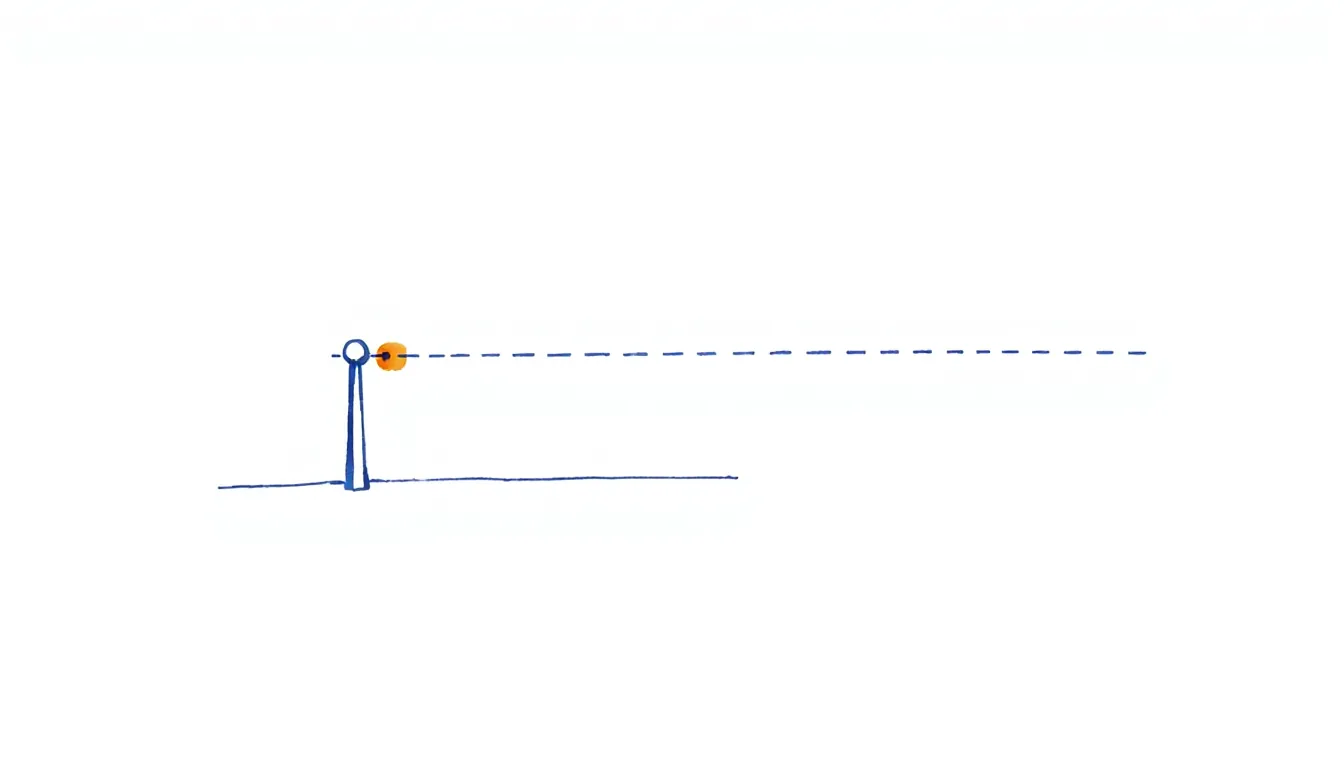
A blinking laser is really a simple puzzle: on, off, on, off. You walk through when it’s off. The tricky part is the moment in between. When exactly does it come back? In Laser Thief, the magenta laser answers that question with a quick, fast flicker. We think that flicker is one of the fairest details in the game.
What magenta does
According to the studio, magenta is the “pulse” laser. It either blinks on a timer or on the beat of the music. The game’s laser lexicon puts it this way: “Blinks on a timer and flickers just before it comes back. Time it.”
Two states here are well designed:
Off means almost invisible. When the laser is off, it’s just a faint dashed line. So you can see where it’ll be again soon, but it clearly reads as harmless.
It flickers before the comeback. In the last 0.4 seconds before it switches back on, or in the last 30 percent of the period, it flickers at 14 hertz. For lasers that blink on the beat, the warning comes on the final quarter note.
Our blink timeline
We doodled the cycle the way the first magenta lesson in training builds it. There, eight magenta beams run on a 3.2-second cycle, half of it on.
on ████████████████ off - - - - - - - -  flicker ≋≋≋  on ████
   0 s            1.6 s                          3.2 s
That’s simplified, of course, but it shows the idea: the dark phase has an end, and that end announces itself. Start too soon and you get “Too early!” Wait it out properly and you get “Perfect timing!”
In the story, magenta shows up for the first time in level 1-08, “PULSE GATE,” with a 3-second blink cycle. The hint there is as short as it gets: “Magenta walls blink. Cross while they’re dark.”
Telegraphing as fairness
In game development this principle is called “telegraphing”: a danger announces itself before it strikes. A boss winds up before it swings. A floor crumbles before it gives way. Without a warning, a hit feels like bad luck. With a warning, it feels like your own mistake, and you learn from your own mistakes.
That matters even more in a room-scale game. You move with your whole body, often crouched, and you can’t reverse course in a tenth of a second. A flicker in the last 0.4 seconds is a signal you’ll catch even out of the corner of your eye, because a fast flicker stands out more than a steady glow.
Fine-tuning for your own pace
If you need more time, you can adjust the laser speed. The LASER SPEED setting has three levels and lives on the level select and results screens. On EASY, magenta’s blink period lasts 1.5 times as long as the original, on NORMAL 1.25 times, and on HARD it stays as designed. The flicker stays either way.
And in the Dancing Lasers music mode there’s an extra rule: lethal beams in your path only blink there if they stay dark for at least two beats.
A brother on the beat
The violet laser uses the same idea, by the way. It’s only solid on the beat of the music and a harmless ghost in between. Through its last ghost beat it flickers at 16 hertz, like a countdown. Two colors, one principle.
Three tiny delights
- The dashed off-line. You can see where the danger is waiting without it being dangerous.
- 14 hertz. A fast flicker catches your eye even when you’re looking somewhere else.
- “Too early!” Feedback that doesn’t say “wrong” but “almost.”
What we’d steal for our own projects
- Announce every danger. A short signal before the strike makes timing learnable.
- Keep the off state visible. Dashed instead of gone: the map in your head stays complete.
- Make the pace adjustable, not the warning. Slower is fine, but the heads-up stays.
Laser Thief is available in the Meta Horizon Store. As with any room-scale game: clear your space before you duck under magenta.