ping #19 · tiny delights
The Seed That Becomes a Crystal
In Sozo's intro, you grab a glowing seed, let go, and the Core Crystal bursts up out of your floor. On the bond you plant yourself.
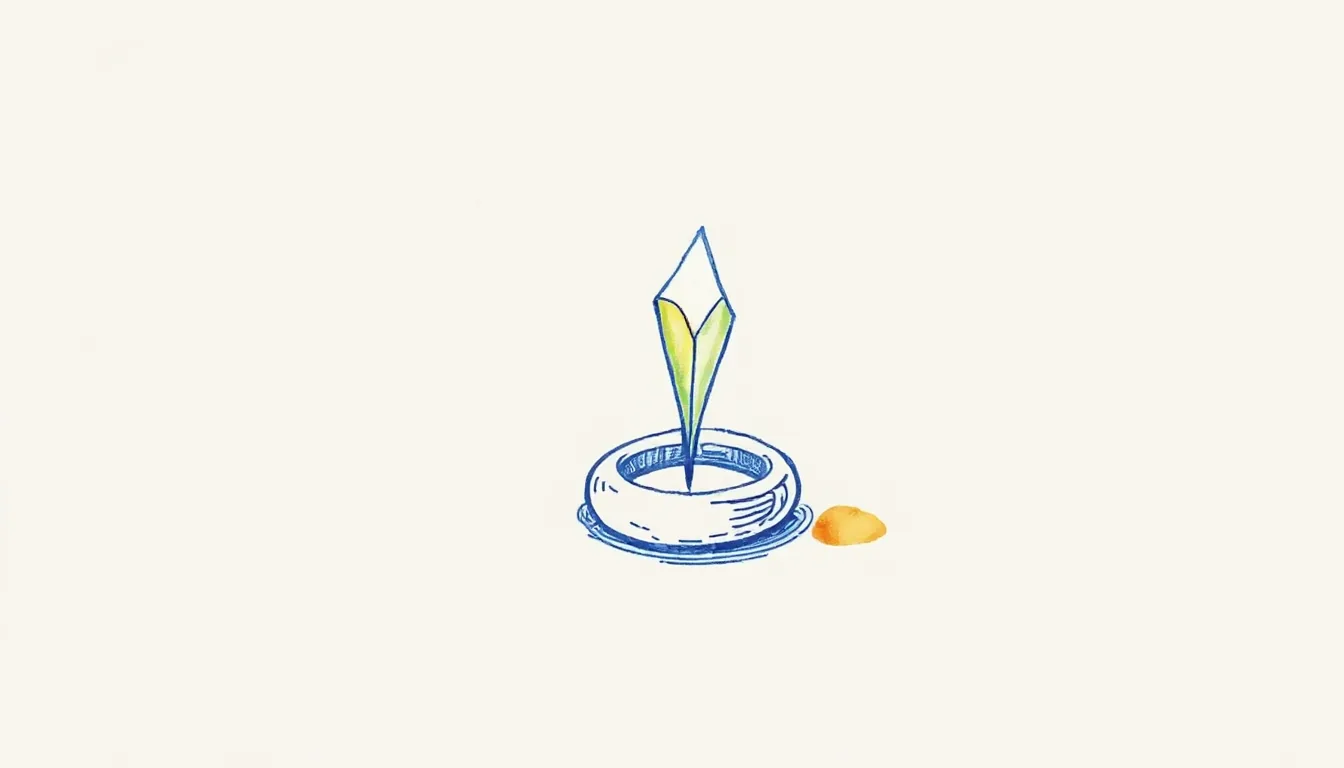
In almost every tower defense game there’s something you have to defend: a castle, a gate, a core. Most of the time it’s just already standing there when the level begins. In Sozo – Tower Defense, it’s different. Here you plant it yourself. With one hand movement, in your own room. That single gesture is our ping for today.
Grab the seed
The moment lands in the third beat of the intro. According to the studio’s game guide, ECHO has just explained that Malgrath shattered the crystal and only a seed is left. Then a glowing crystal seed floats up in front of you, an arm’s length away. The instruction reads “GRAB THE SEED,” with “PINCH OR GRIP TO GRAB” underneath: a pinch gesture with hand tracking, the grip button with a controller.
You reach for it. And then comes the loveliest part: you let go. The seed is pulled toward a ring on the floor, buries itself in the ground, and the Core Crystal bursts up out of it. The display reads “PLANTED!”
It’s the first of three actions in the intro, and it only takes a few seconds.
Letting go as the action
What we like most is that the decisive movement is a letting go. In a lot of VR games, interaction means: grab, hold, throw, pull. Here, the end of the gesture is the actual effect. You don’t have to aim, you don’t have to place anything precisely. The game pulls the seed to the right spot on its own.
There’s a practical reason for that: in Sozo, the Core Crystal has a fixed place in the arena, which is calculated from your room. According to the guide, it stands on the floor, with distance from the rifts and open space all around it. If you could set it down freely, it might end up behind the couch. This way the gesture stays free and the result is still correct. You get the feeling that you planted it, and the game takes care of the right patch of ground.
Why planting creates a bond
The crystal is the centerpiece of every level in Sozo. Enemies march toward it along a glowing path across your floor. If one reaches it, the crystal loses health. If that hits zero, the level is lost: “RIFT BREACHED.” The stars at the end of a level also depend on how much crystal HP is left. Three stars only come if it took practically no damage.
All of this could be explained in a tutorial window. The intro does something smarter: it lets you bring the crystal into being yourself, before you even know how important it is. A seed is small and vulnerable, and you carry it carefully. Whoever has planted something feels responsible for it. When the first rift opens a little later and ECHO hides behind this very crystal, of all things, the message is clear without anyone having to say it: this one is yours.
And what if you hesitate?
Not everyone reaches out right away, especially on the very first start with a new headset. The guide describes a friendly safety net for that: if you do nothing for a few seconds, you get a clearer hint, and if you’re still hesitating after that, ECHO carries the seed itself. Nobody gets stuck in the intro.
Three tiny delights
- The ring on the floor. A target you don’t have to hit. The seed finds its own way.
- The burrowing. The seed doesn’t just fall, it presses into the ground. Your hardwood floor becomes fertile soil for a moment.
- “PLANTED!” A single word as a reward, short and satisfied.
What we’d steal for our own projects
If your project has a central object that users are meant to tend or protect, let them create it themselves instead of presenting it finished. A project folder you name yourself, an avatar you hatch from an egg, a garden whose first seed you set. Small gesture, big bond.
And one more thought for interaction designers: check whether the most important movement could be a letting go. Letting go is easy, error-free, and still feels meaningful.
On our sketch page there’s now a seed inside a circle, with three little rays around it. That’s all it needs.