ping #6 · tiny delights
A Jiggly Blob with an Antenna: ECHO, the Tiniest Guardian in the World
ECHO from Sozo is a pearlescent cyan droplet with an antenna and floating mittens. Why so little character can carry so much expression.
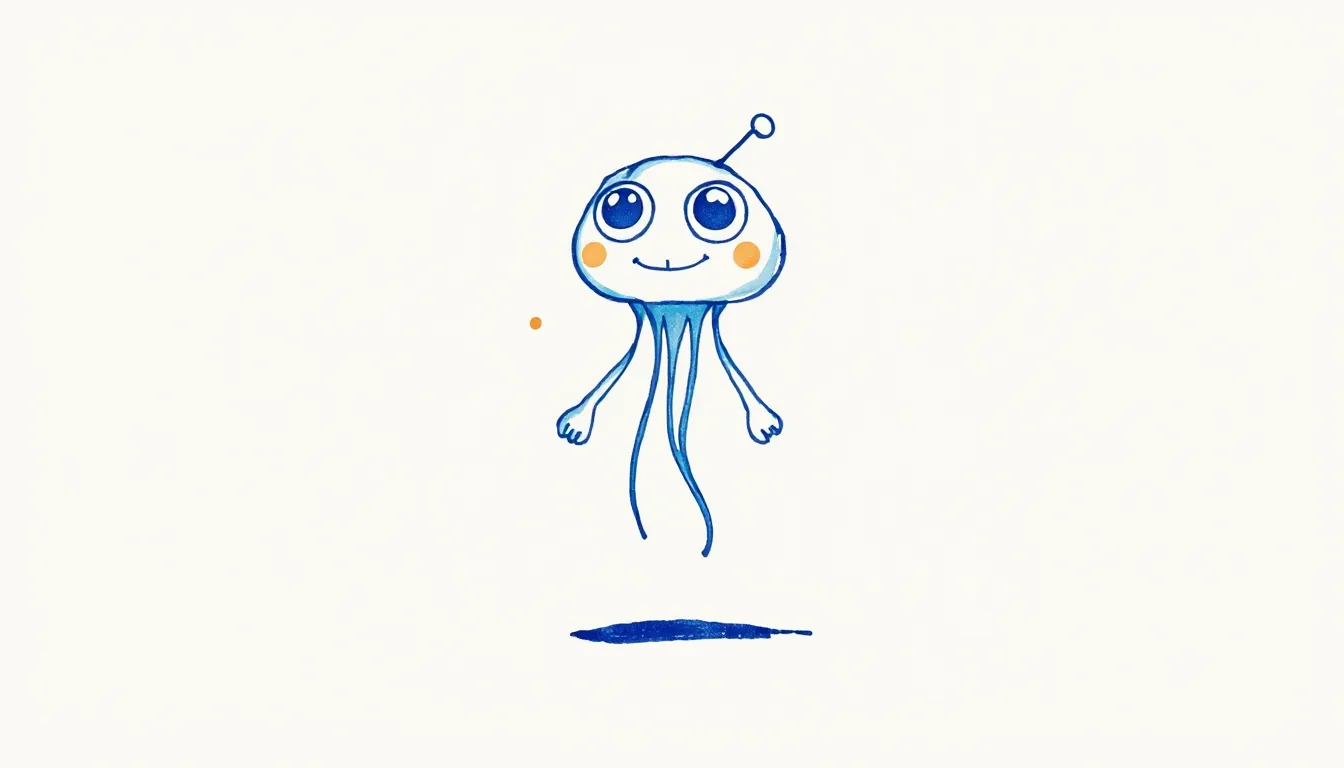
Some game characters need armor, a cape, and a tragic backstory to stand out. ECHO needs a droplet. The little guardian from Sozo — tower defense, a mixed-reality game for Meta Quest 3 and 3S — is, according to the studio’s game guide, a hologram in the shape of a pearlescent and cyan jiggly droplet: big glowing eyes, an antenna on top, and floating mittens instead of arms. Legs? None.
We read the description, laughed for a second, and then immediately started doodling. Because ECHO is a tiny masterclass in how little a character needs to feel alive.
Who is this droplet, anyway?
In Sozo’s story, your real room sits on a Nexus, a node where eight worlds press against ours. A Core Crystal held the seams shut for a thousand years, until Malgrath, the Hollow King, shatters it. ECHO is the crystal’s last guardian program. She recruits you as the new Keeper of the Nexus and teaches you everything you need to know about towers, waves, and rifts.
That’s a pretty big job for something that looks roughly like a gummy bear left out in the sun too long. And that contrast is exactly the joke. The guide describes ECHO as small and dryly funny. Not a hero with pathos, but an assistant who takes the situation seriously and herself not at all.
Three shapes, one personality
Once you draw ECHO, you notice fast how much those three basic shapes pull off:
- The droplet is soft, round, and a little unstable. It says: harmless, friendly, maybe a bit wobbly. Pearlescent and cyan make it precious and technical at the same time, like a piece of jewelry made of light.
- The big eyes carry almost all the expression. For a character with no mouth or facial features, the eyes have to tell everything: wonder, seriousness, joy.
- The floating mittens are the smartest part. They aren’t attached to the body, so they can be anywhere. Waving, pointing, shaking — hands without arms are as free as punctuation.
The antenna is the cherry on top. It gives it away: this is a program, not an animal. And it adds a little upward accent to the silhouette, so the droplet doesn’t read as just a splotch.
Expression without limbs
A character with no arms and no legs sounds like a limitation at first. In practice, it’s more of a trick. Plenty of beloved characters in game history work on exactly this idea: floating hands, little body, lots of attitude. It doesn’t just save on animation — it directs your gaze. Where there’s nothing, you look at what’s there.
For ECHO, that means: the mittens show you where to look, the eyes show you how things are going, and the droplet body hops, tumbles, or hides. According to the guide, ECHO tumbles across your real floor in the intro, shakes herself off, does a double-take when she sees you, and waves. Later she hides behind the crystal when the rift opens, and at the end she bows and zips into the crystal. Every one of those gestures works with just those three basic shapes.
Then there’s the sound. In her tips, ECHO types the text into a holographic speech bubble while, per the guide, chattering away in robot beeps. A voice without words that still sets the mood.
Why a droplet fits mixed reality so well
In a game that takes place in your actual living room, a character has a special job: it has to stand out from the couch, the rug, and the bookshelf without feeling out of place. A glowing hologram makes it clear from the start that it doesn’t belong to your furniture. At the same time, it’s small enough not to feel threatening. A droplet on the parquet floor reads more like a visitor than an intruder.
Three tiny delights
- The mittens. Mittens instead of hands with fingers: less detail, more charm. They look like winter gloves for a program.
- The dry humor. A guardian who comments on the end of the world with a slightly crooked line is far more likable than one who’s constantly sounding the alarm.
- The antenna. A single stroke that turns a splotch into a character.
What we’d steal for our own projects
If you’re designing a companion for a game, an app, or a comic, try the ECHO exercise: start with one soft basic shape, give it two big eyes and two freely floating hands. Everything else is optional. Only once those three parts can show feelings on their own is it worth adding more. Often you’ll find you don’t need any more at all.
Our sketchbook now has a page full of wobbly droplets with antennas, anyway. One of them is waving.