ping #9 · design notes
Eight Faces for One Robot: BLIP's Emotions as a Sketch Sheet
Neutral, Happy, Surprised, Worried, Wink, Love, Dizzy, Determined: how few lines BLIP from Laser Thief needs for his eight faces.
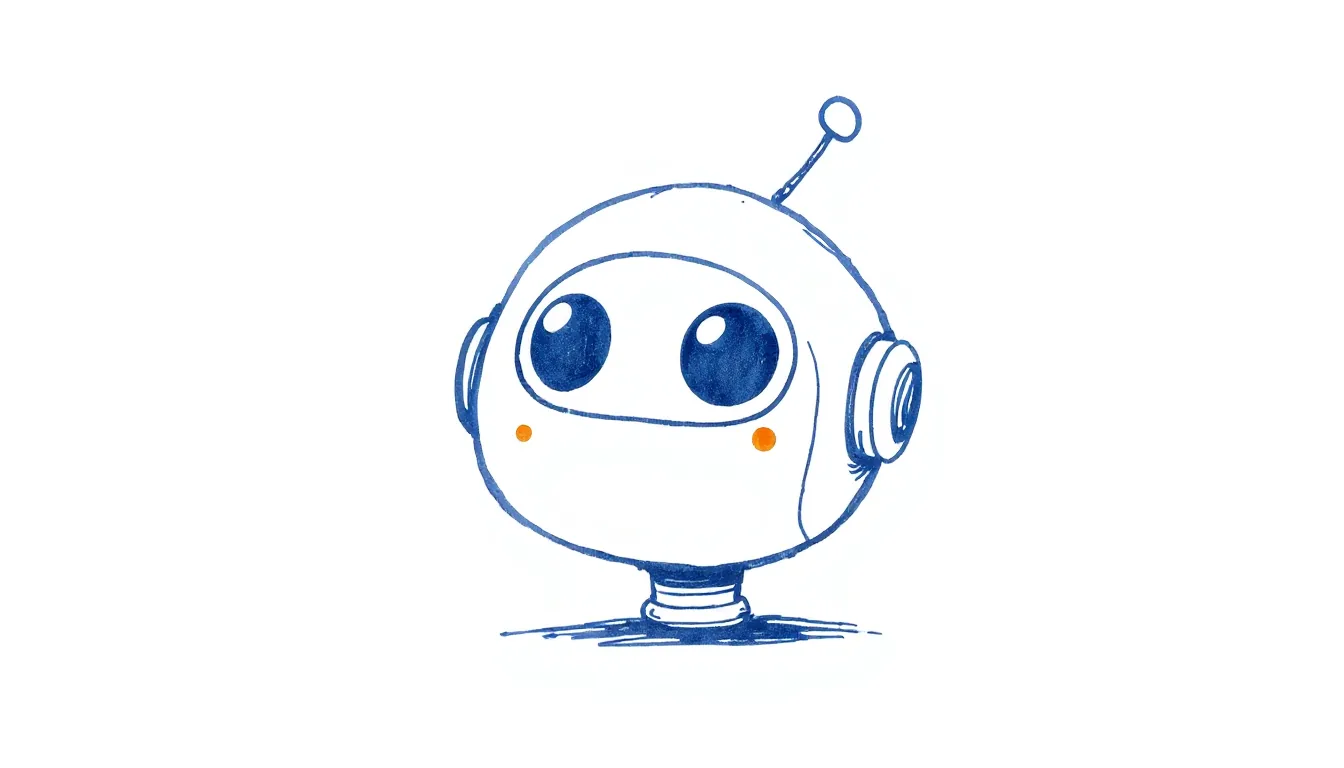
When you’re designing a mascot, the temptation is to give it everything: nose, eyebrows, mouth, ears, maybe a little blush. BLIP, the tiny flying robot from Laser Thief, gets by with much less. According to the studio, his face has exactly eight emotions. We lined them up like a practice sheet in a sketchbook.
The sketch sheet
The eight states are called this in the game:
| Emotion | When it fits |
|---|---|
| Neutral | Default mode, say while hovering in the menu |
| Happy | A clean run, a successful heist |
| Surprised | Something unexpected happens |
| Worried | Danger nearby |
| Wink | A little insider moment |
| Love | Pure delight |
| Dizzy | After a laser hit |
| Determined | Ready for the next try |
The “When it fits” column is our own reading, not the game’s mapping table. But even the list shows something lovely: it’s not just an emotion wheel from happy to sad. It includes two states that come straight from the gameplay, namely Dizzy and Determined. A heist robot doesn’t need “sad,” it needs “dazed” and “now more than ever.”
Dizzy: the most honest face
Dizzy is documented at a specific spot. When BLIP himself gets hit by a laser, he flashes red, glitches, and is dazed for 1.6 seconds. Even in training, a dizzy BLIP is part of the feedback when a lesson goes wrong: sparks, a red flash, and then the prompt to head back to the pad.
What we like is that the game shares the failure this way. It’s not just you who touched the beam—your companion looks shaken too. It takes the harshness out of the moment. A dazed robot reads more as funny than as scolding.
Eyes that look at you
Two details turn eight stills into a character:
The blinking. BLIP blinks every 1.8 to 4.5 seconds. So the interval isn’t fixed. A face that blinks on an exact beat feels mechanical, even for a robot. Slightly irregular blinking feels alive.
The gaze. His eyes follow you or whatever he’s pointing at. In a room-scale game that matters. You move through your actual room, duck, turn around, and the little robot keeps you in view. That’s almost the whole personality, wrapped up in two rules.
Why so little is enough
If you’ve ever doodled emojis or comic heads, you know the principle: most of the emotion lives in the eyes. A wink is one closed eye. Love usually reads through heart shapes. Dizzy through circling lines. Surprised through wide-open eyes. For a mascot that often hovers small and at a distance inside a headset, this reduction is actually an advantage. Fine eyebrows would be hard to read from six feet away. A big pair of eyes, not so much.
Then there’s the voice that isn’t really a voice. BLIP speaks through a typing speech bubble and robot chirps. Face and text split the work: the line says what’s going on, the face says how it’s meant.
Three tiny delights
- Game-specific feelings. Dizzy and Determined fit exactly a game about hits and new attempts.
- Irregular blinking. A small random range makes the robot feel more alive than any extra detail.
- Eyes that come along. Move around the room and you get watched. It feels like company.
What we’d steal for our own projects
- Derive emotions from the core experience. Don’t ask “what feelings exist?”—ask “what moments does my product have?”
- A random range instead of a beat. Whether it’s blinking, breathing, or bobbing: a range feels more natural than a fixed value.
- Start with eight states. Eight faces are enough for a sketch sheet, and enough for a character.
Our doodle: eight little circles, each with just a pair of eyes, and underneath an arrow with “he doesn’t need more.” You can find Laser Thief in the Meta Horizon Store.